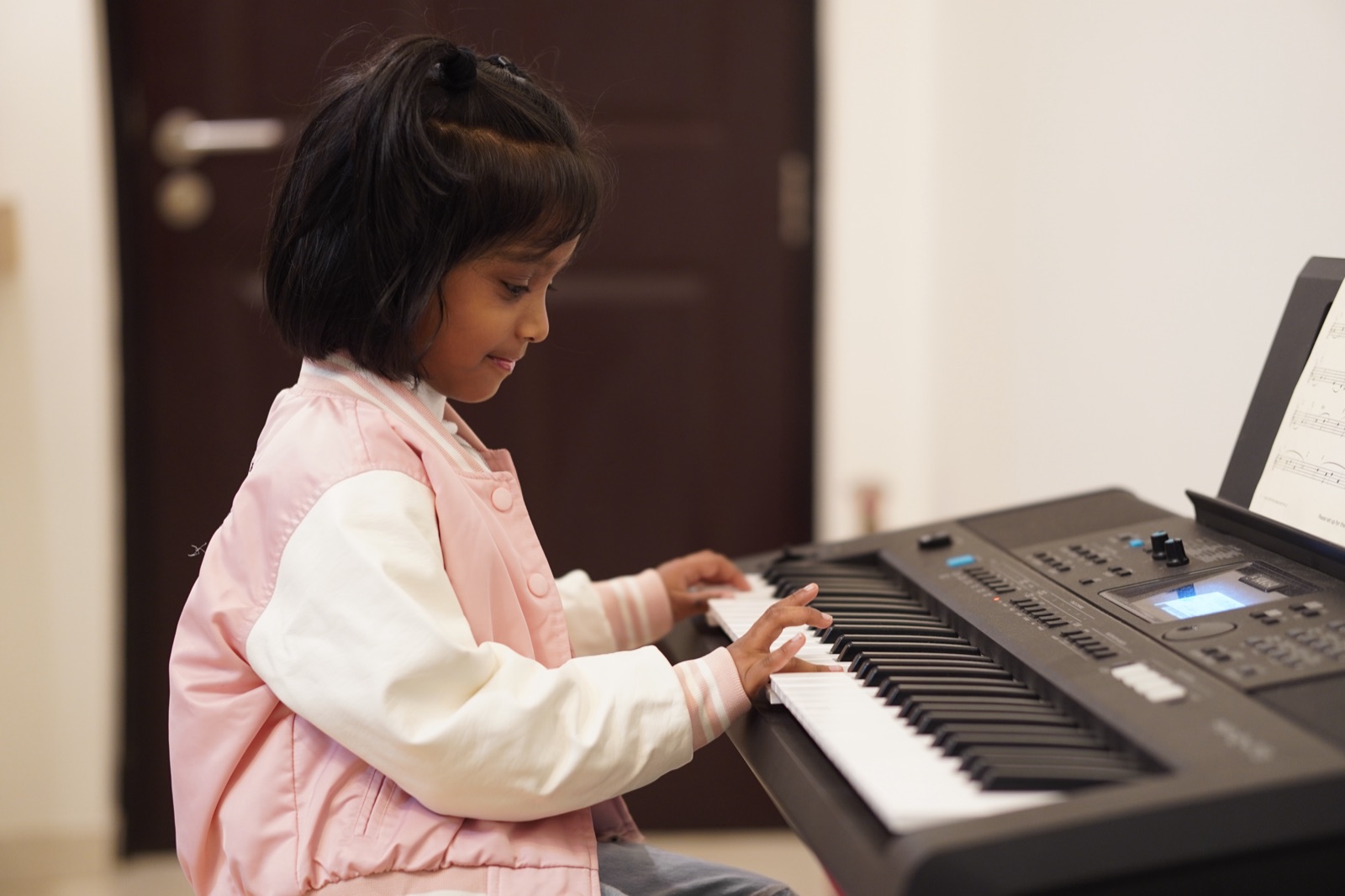
Keep sessions short and certain
Ten focused minutes, five or six days a week, beats a stressed hour once a week. Put practice at the same time whenever you can — after snack, before screens — so it becomes part of the day, not a negotiation.
Celebrate the small wins out loud
Name what improved: a smoother left hand, a steadier pulse, remembering a fingering. Children practise more when they can hear that someone noticed. Stickers and charts help some families; a quiet “that sounded clearer than yesterday” helps almost everyone.
- One piece they love, even if it’s “too easy”
- One technical bite (scales, a tricky bar)
- One playful finish — improvisation, a duet, or their favourite song
Let the teacher own the method
Your job at home is atmosphere and consistency. Ours is the sequence of skills. If you’re unsure what to prioritise this week, ask in the lesson — we’ll give you a clear home brief so practice stays calm.
Curious how we structure the early months? Explore our learning pathway, or book a trial and we’ll show you what a supportive first term looks like.